
By FacegyMiami on November 9, 2026
Run your fingers across your cheek. If it feels rough, bumpy or a little like orange peel, you're not alone, and it's one of the most fixable skin concerns we see at FaceGym Miami. The tricky part is that the internet is full of quick fixes that don't hold up.
So here's how to improve skin texture based on what dermatology research supports, what a good facial can add, and what's mostly hype.
What Is Skin Texture?
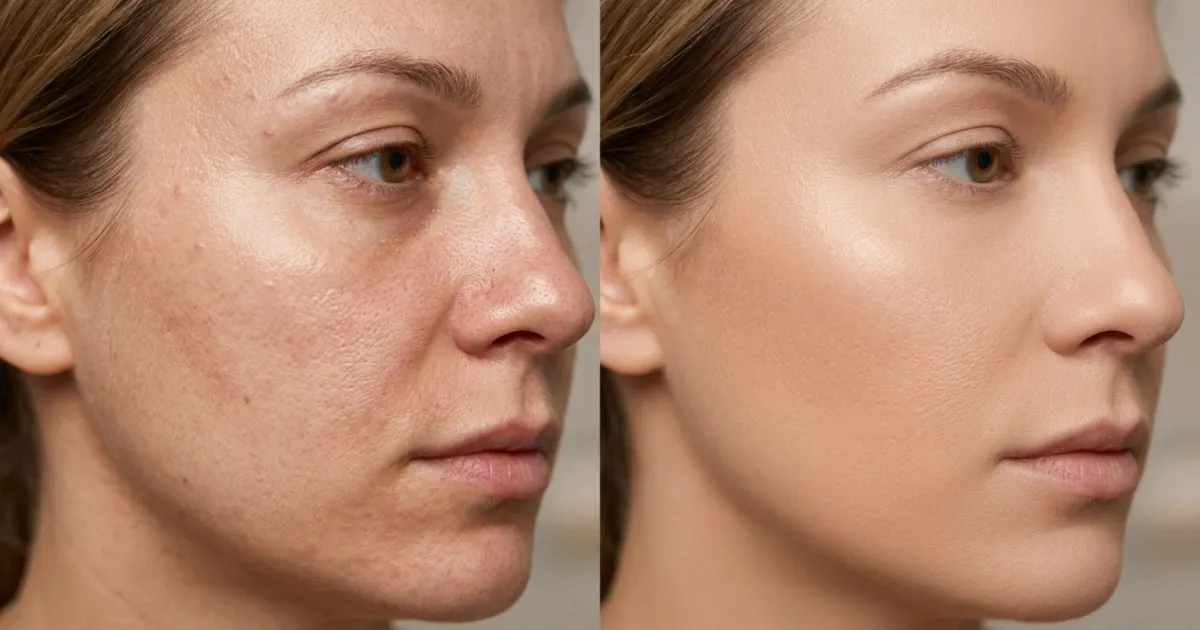
Skin texture is how the surface of your skin feels and looks up close. Smooth skin reflects light evenly. Uneven skin texture shows up as roughness, small bumps, visible pores, flaky patches or shallow acne scars, and it often makes skin look dull even when the tone is even.
What Causes Rough or Uneven Skin Texture?
Most textured skin comes down to a handful of causes:
Dead cell buildup. Skin sheds constantly, but when old cells linger on the surface, skin feels rough and looks flat.
Dehydration and a weak skin barrier. Dry, tight skin flakes and catches light unevenly.
Sun damage. Dermatologists list tactile roughness as a classic sign of photoaging, along with wrinkles and dark spots. UV breaks down collagen over time.
Clogged or enlarged pores and acne. Congestion creates bumps, and breakouts can leave scars.
Keratosis pilaris. Those tiny rough bumps, usually on the arms but sometimes the cheeks, affect an estimated 40% of adults.
Knowing your cause matters, because the fix for flaky dehydration is very different from the fix for acne scars.
How to Improve Skin Texture: 7 Steps That Work
1. Wear Sunscreen Every Single Day
This is the least exciting step and the most proven. In a 4.5-year trial of 903 adults, people who used sunscreen daily were 24% less likely to show increased skin aging, and only the daily group showed no measurable worsening in skin surface texture.
In Miami, UV is strong all year, not just in summer. Use a broad-spectrum SPF 30 or higher, apply enough (most people use far too little), and reapply about every two hours when you're outside or sweating. A tinted mineral formula with iron oxides also helps with dark spots.
2. Exfoliate Gently, Two or Three Times a Week
Exfoliation clears the dead cells that make skin feel rough. Chemical exfoliants usually do this more evenly than gritty scrubs. Glycolic and lactic acid (AHAs) smooth the surface, while salicylic acid (a BHA) works inside oily, clogged pores.
The American Academy of Dermatology advises a gentle approach, and more is not better. Start two or three nights a week and build up slowly. One catch: the FDA notes that AHAs make skin more sensitive to the sun, so step 1 isn't optional while you use them.
3. Add a Retinoid at Night
Retinoids speed up cell turnover and support collagen. Prescription tretinoin has the strongest evidence for sun-aged skin: a systematic review of seven trials found visible improvement starting around one month, clear results by about four months, and benefits lasting up to two years.
If you're new to retinoids, start with an over-the-counter retinol or adapalene gel two or three nights a week. Expect some dryness or peeling at first. Skip retinoids if you're pregnant or trying to conceive, and don't use them on the same night as a strong acid.
4. Use Niacinamide and Vitamin C in the Morning
Niacinamide is gentle and pairs well with almost everything. In one 12-week split-face study, 5% niacinamide improved skin texture and fine lines, and lower strengths have been shown to reduce oil and the look of pores.
Vitamin C (L-ascorbic acid) brightens and helps protect against UV damage under your sunscreen. Research suggests 10–20% is the useful range, and going higher just adds irritation.
5. Moisturize to Repair Your Barrier
A healthy barrier is the base for smooth skin. Look for moisturizers with ceramides, glycerin or hyaluronic acid, and use them twice a day, especially once you add acids or retinoids. Even in South Florida, skin dries out. A University of Miami dermatologist points out that heavy air conditioning and cooler, drier stretches leave plenty of Floridians with dry, flaky skin.
6. Book a Professional Deep Cleansing Facial
Some texture problems need more than a home routine. A deep pore cleansing facial clears congestion with professional exfoliation and careful extractions, so skin feels smoother right away. Superficial face peels go a step further. The AAD notes they usually take a series of three to five sessions, a few weeks apart, with up to a week of mild peeling.
A tip from our treatment room: stop retinoids a few days before any peel. They can make a light peel act far deeper than planned.
7. Support Circulation With Facial Massage
We're going to be straight with you here. Facial massage won't resurface skin the way a retinoid or peel does. What it can do is boost circulation and firmness. A 2018 study from Tokyo found a single five-minute facial roller massage raised blood flow in the cheeks, and a 2025 trial of 34 women found eight weeks of regular roller massage improved skin elasticity.
That's why our facial sculpting massage and lymphatic drainage techniques sit alongside skincare, not in place of it. Clients come for the lift, glow and de-puffing, then pair it with a solid home routine for texture. You can read more on the benefits of facial massage here.
A Simple Weekly Routine to Start With
If you want to know how to improve skin texture without overthinking it, start here:
Every morning: gentle cleanser, vitamin C or niacinamide, moisturizer, SPF 30+.
Two or three nights a week: retinoid, then moisturizer.
One or two other nights: AHA or BHA exfoliant, then moisturizer.
Remaining nights: cleanse and moisturize only, so your skin can recover.
Every four to six weeks: a professional facial to clear congestion.
Give it eight to twelve weeks before you judge it.
Mistakes That Make Skin Texture Worse
Over-exfoliating. Stinging, redness and a tight, shiny look mean your barrier needs a break.
Stacking every activity at once. Acid, retinol and vitamin C on the same night is a recipe for irritation.
Skipping SPF on cloudy days. UV still gets through.
Picking at bumps. It spreads inflammation and can leave marks that take months to fade.
When to See a Dermatologist
If you have deep acne scars, active cystic acne, rosacea, or texture that hasn't changed after three months of steady care, see a board-certified dermatologist. Treatments like microneedling, medium-depth peels and laser resurfacing are medical procedures. They can do more for scarring, with more downtime.
FAQs About Improving Skin Texture
How long does it take to improve skin texture? A facial or exfoliation can make skin feel smoother within days. Lasting change takes longer: retinoid results start around one month and build over three to four months.
Does drinking water improve skin texture? Staying hydrated is good for you, but there's little evidence that drinking extra water smooths skin. A good moisturizer does more for surface dryness.
Can skin texture be repaired? Yes, for most people. Daily SPF, gentle exfoliation and a retinoid fix most rough texture. Deep acne scars usually need professional treatment.
How often should I exfoliate? Two or three times a week is a good starting point for most skin types. Sensitive skin may only be needed once a week.
Smoother Skin Starts With a Plan
The best answer to how to improve skin texture is boring in the best way: protect, exfoliate, renew and moisturize, every week, for a few months. Professional treatments speed things up and keep you on track.
If you're in Miami and want a plan built around your skin, our Aventura team can help. Browse our services or book an appointment at FaceGym Miami, 19064 NE 29th Ave, Aventura.